









Wildari Planet
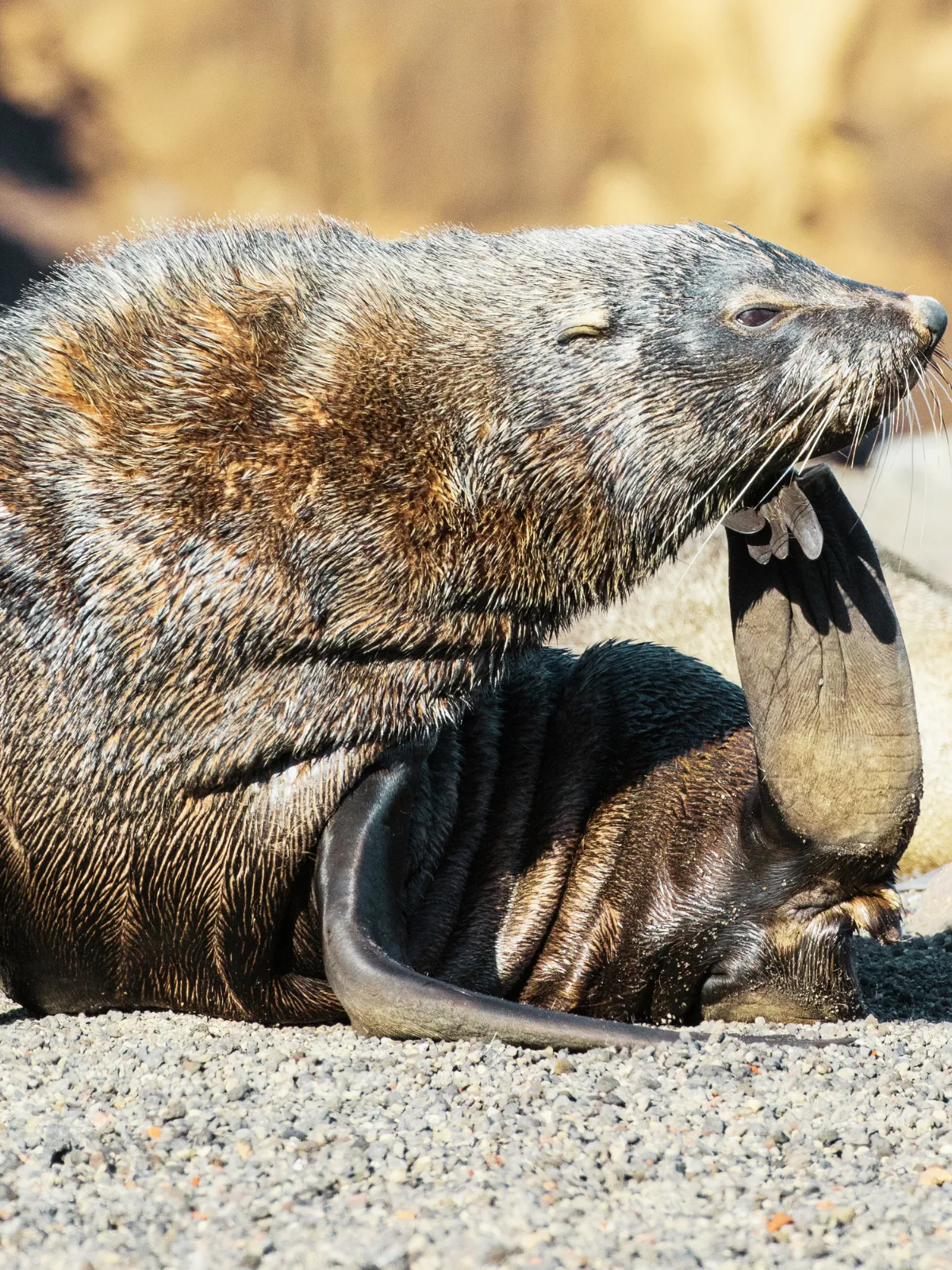
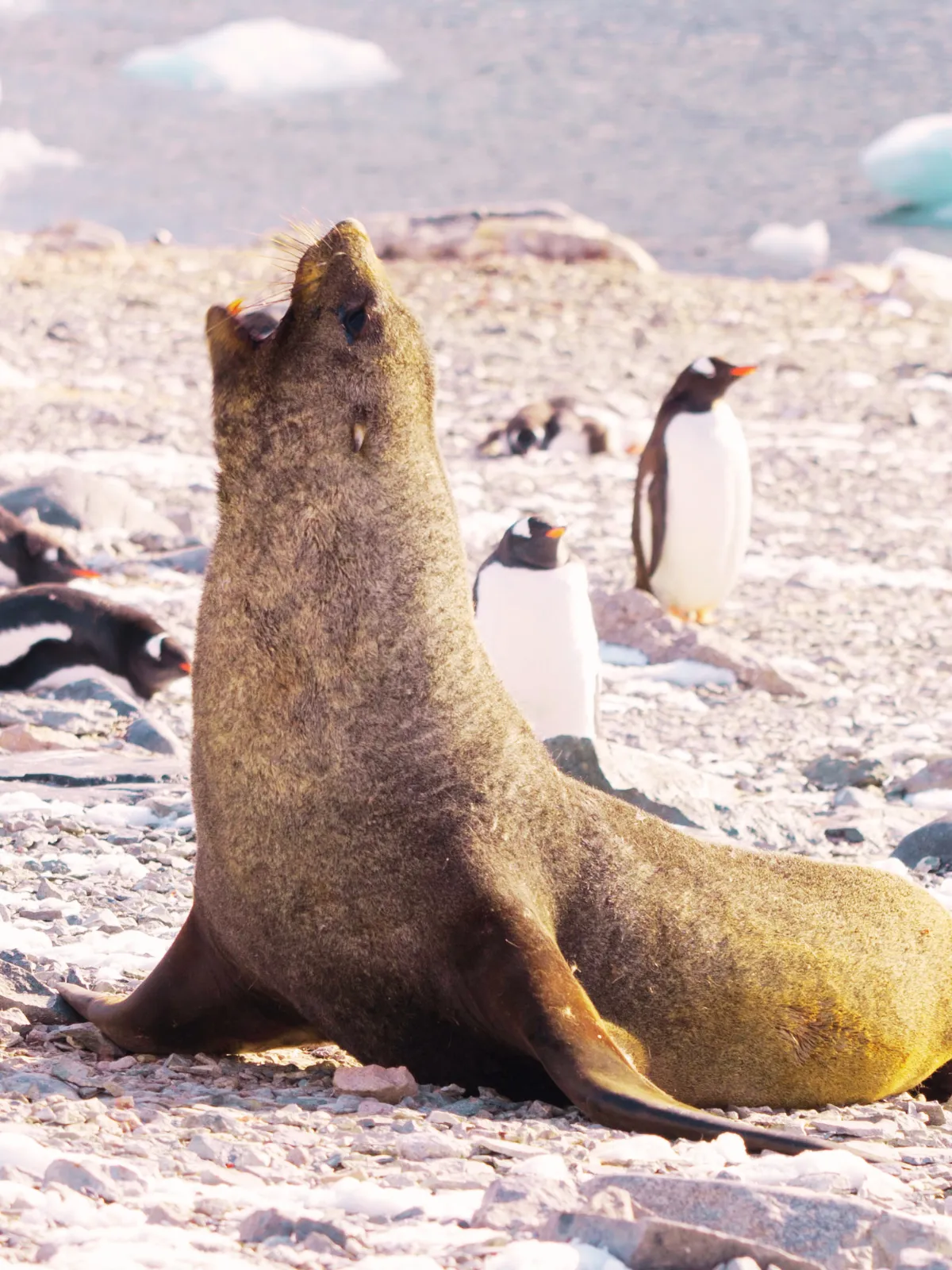
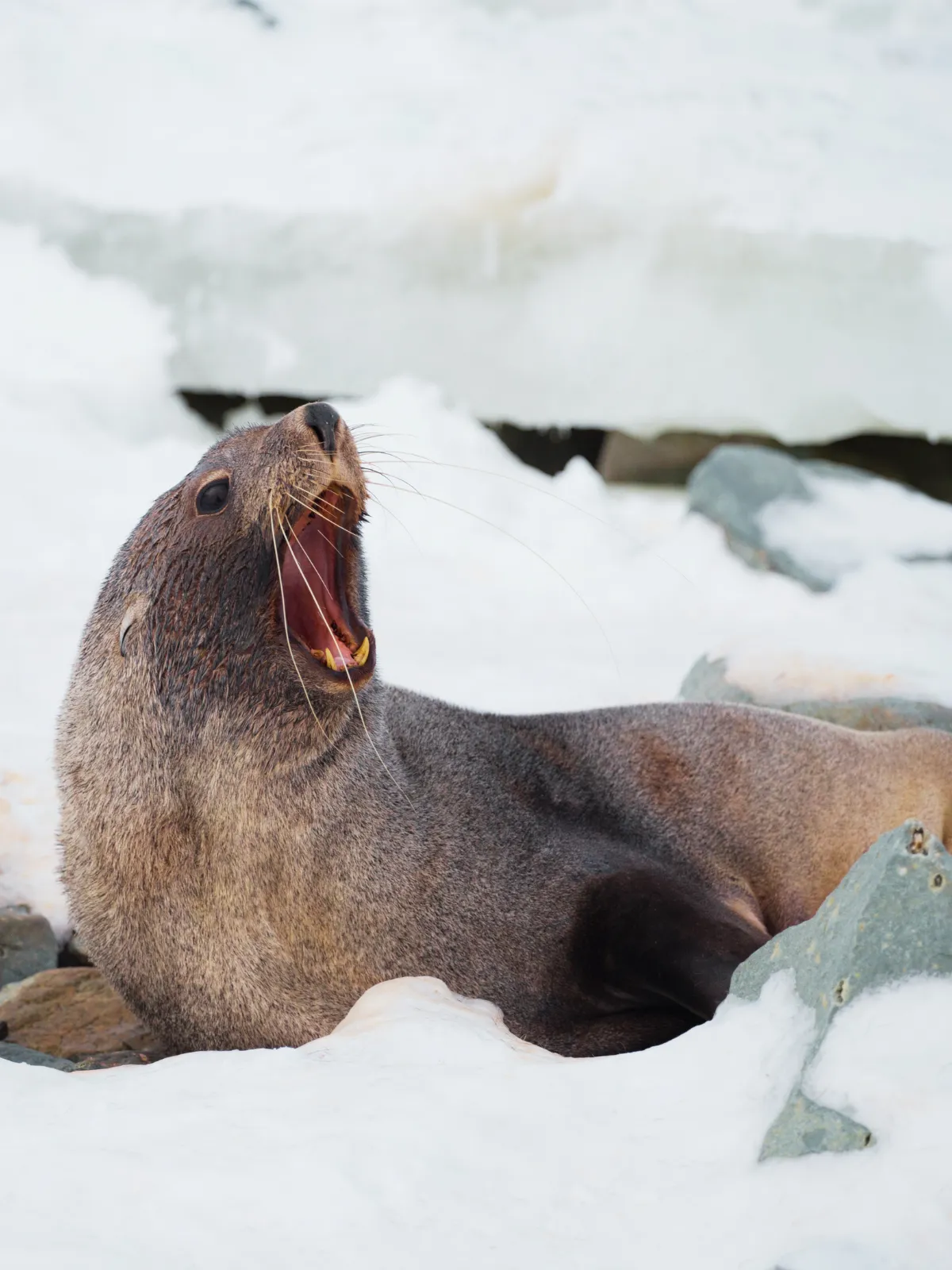
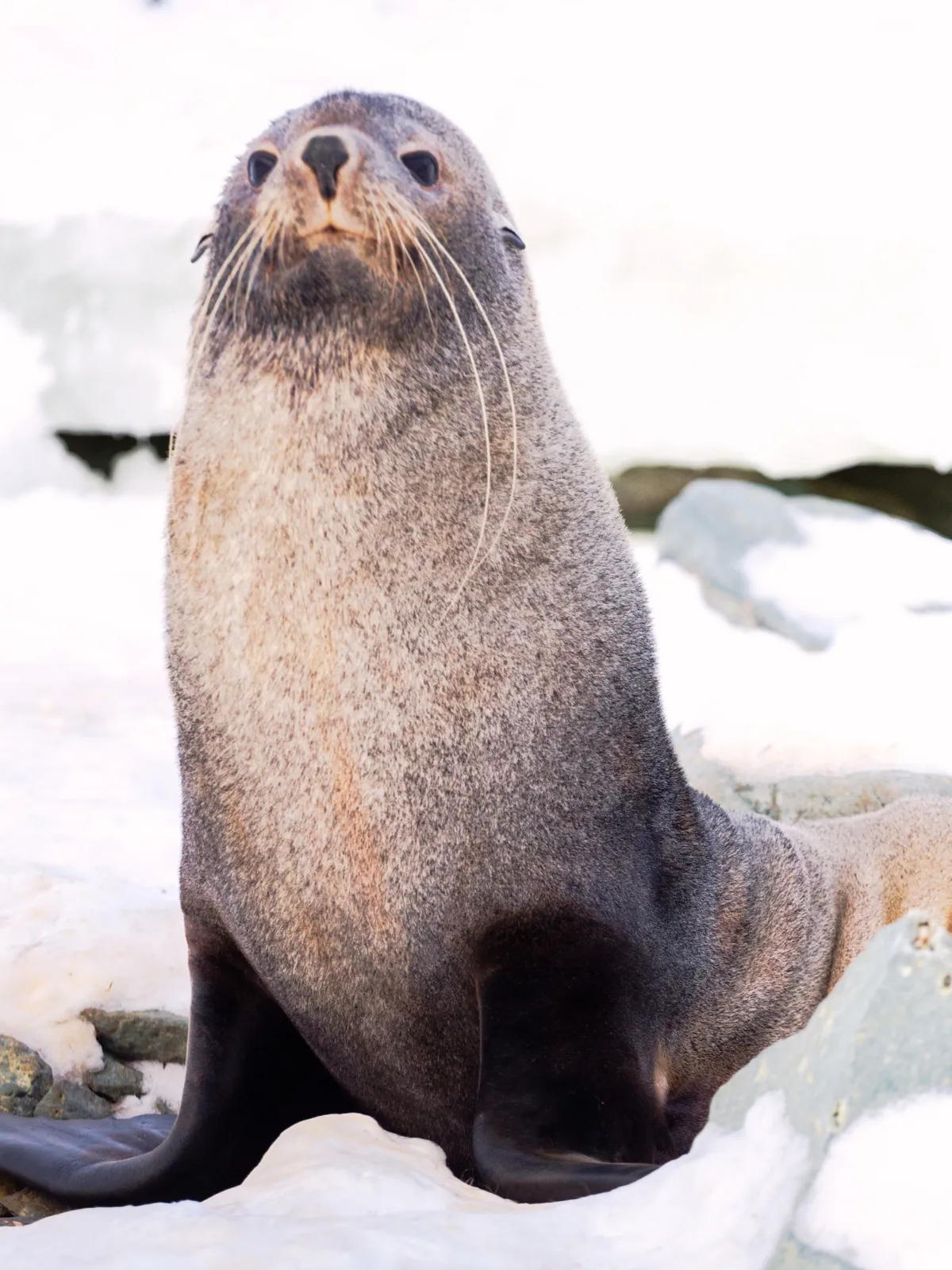
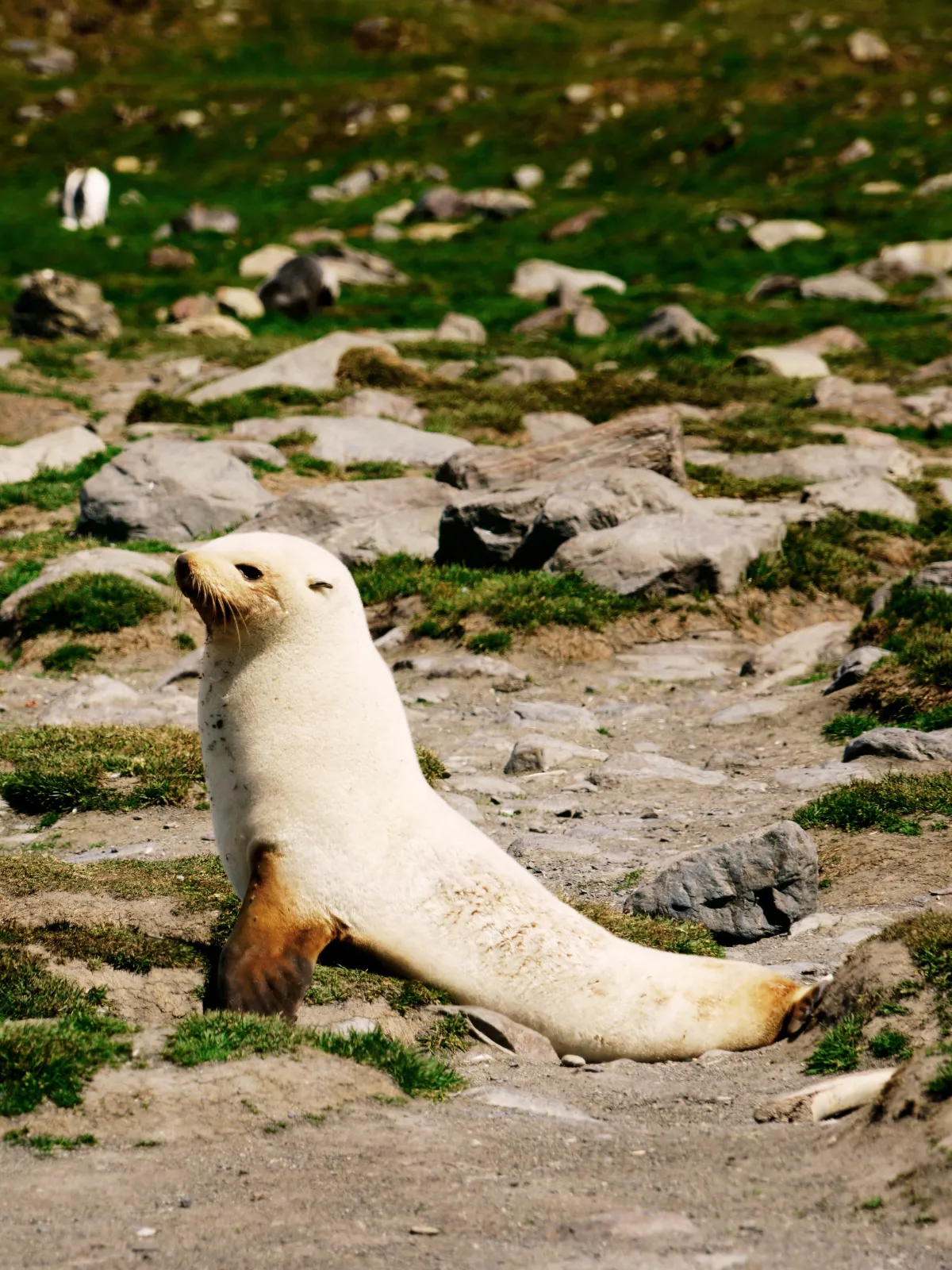
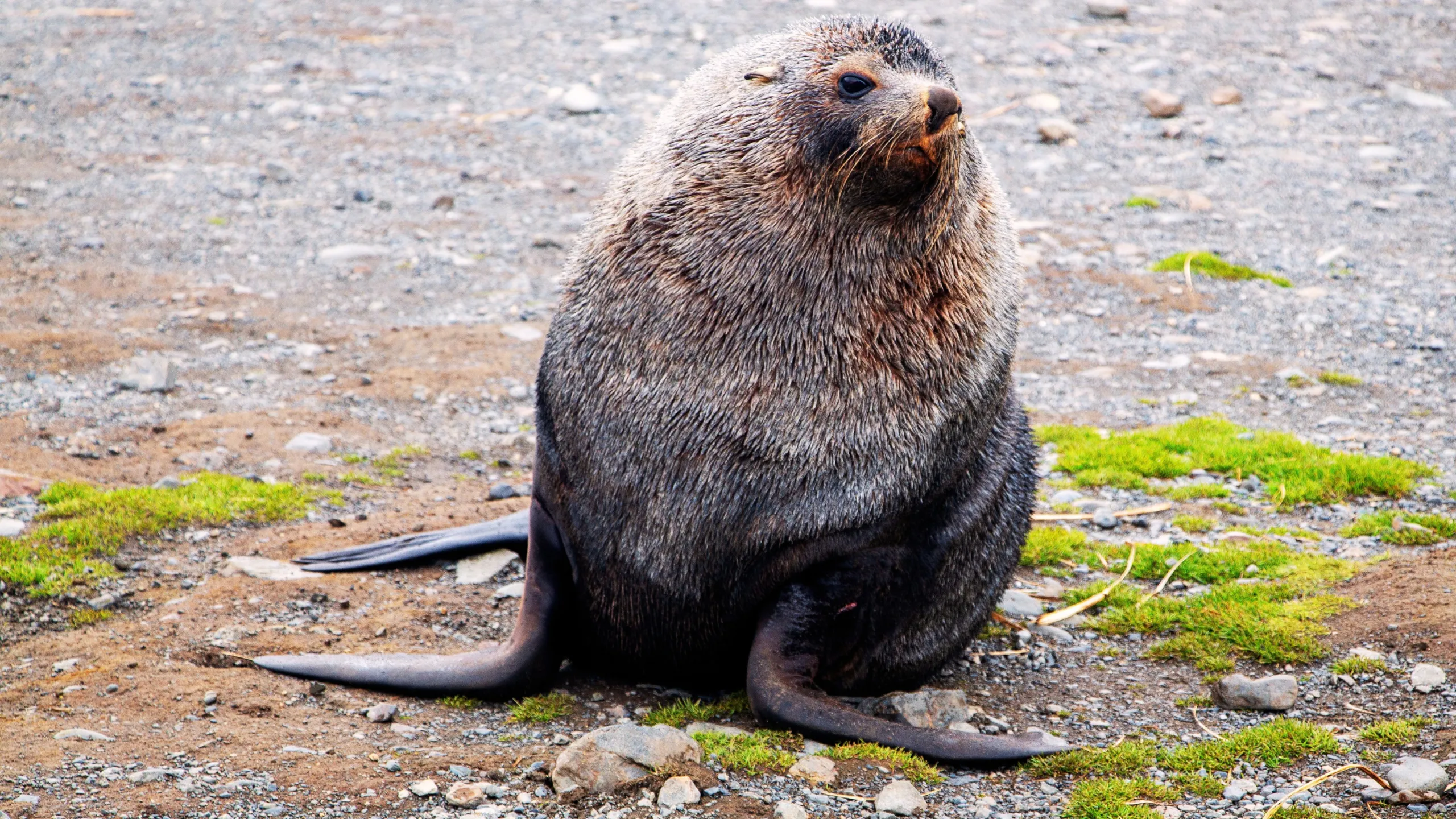
An Antarctic fur seal rests on a stony, patchily vegetated ground, propped up on its dark front flippers. It features thick, grizzled grey and brown fur across its neck and back, dark facial whiskers, and a pointed snout tilted slightly upward.
AntarcticaMammalsEndangered

Antarctic Fur Seal

Where Antarctic Fur Seals Live

Continent: Antarctica

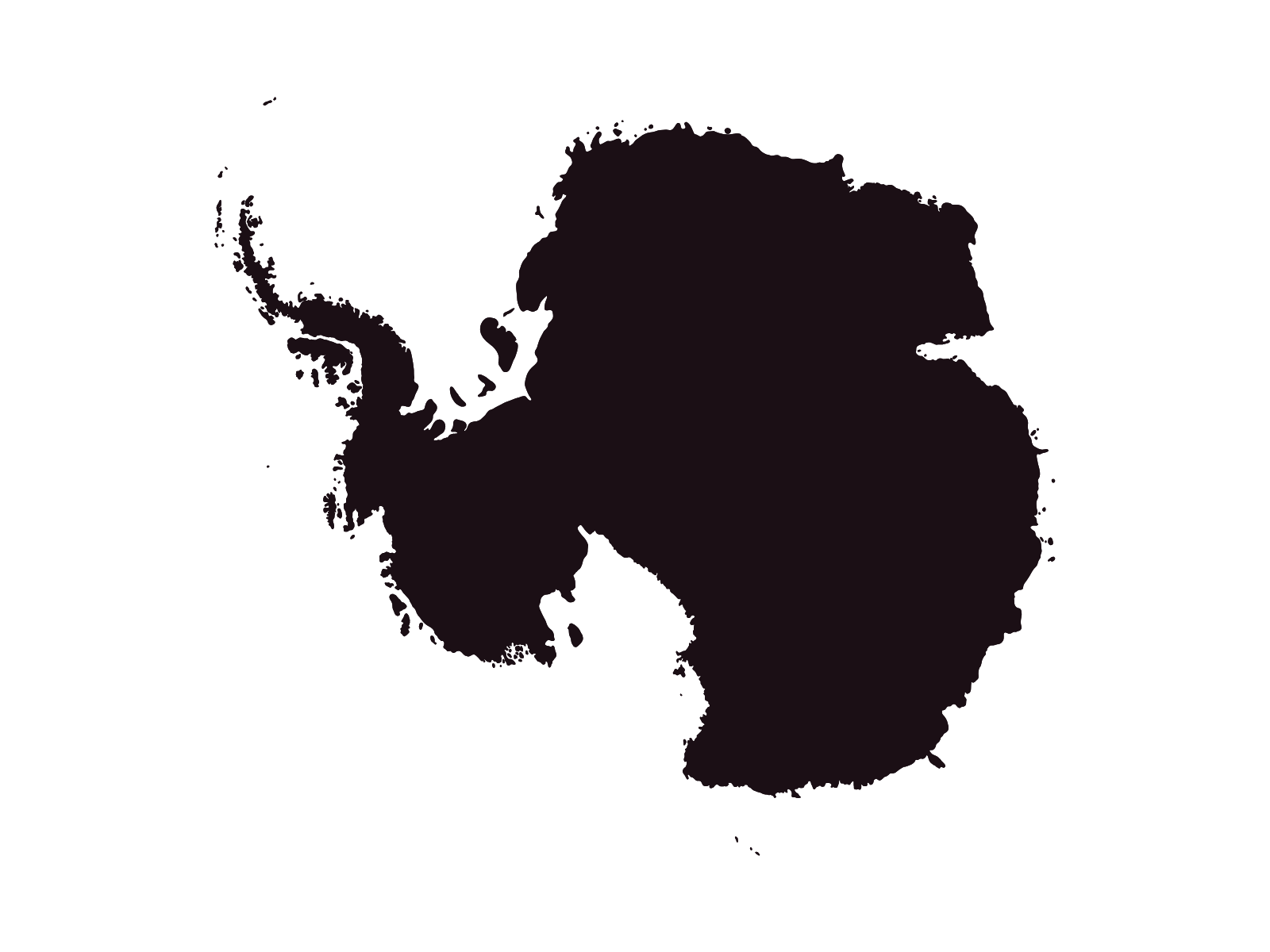
The Antarctic fur seal inhabits the cold subantarctic islands of the Southern Ocean, with the vast majority of the population breeding on South Georgia Island and foraging in the frigid waters surrounding the Antarctic Peninsula.

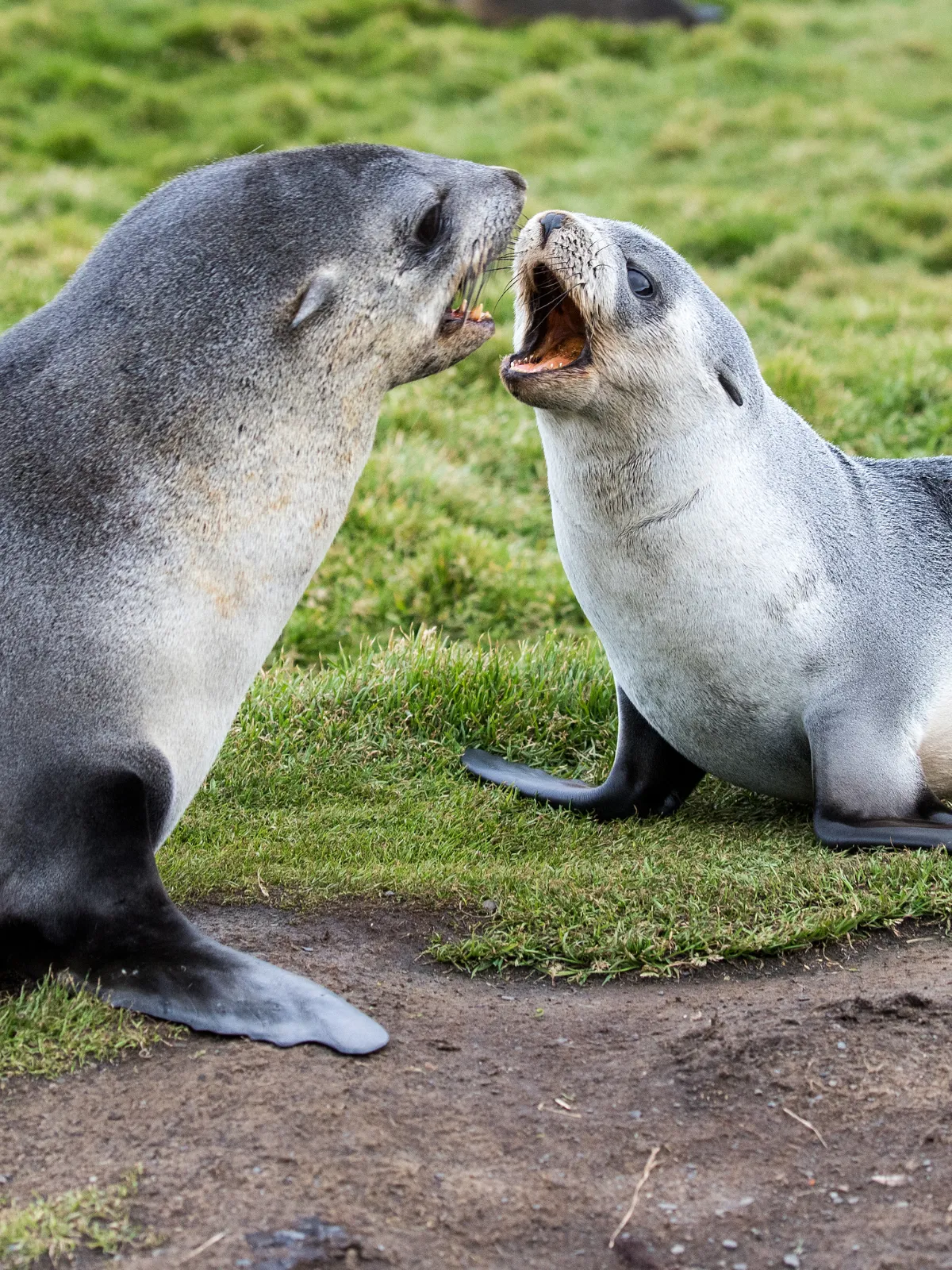
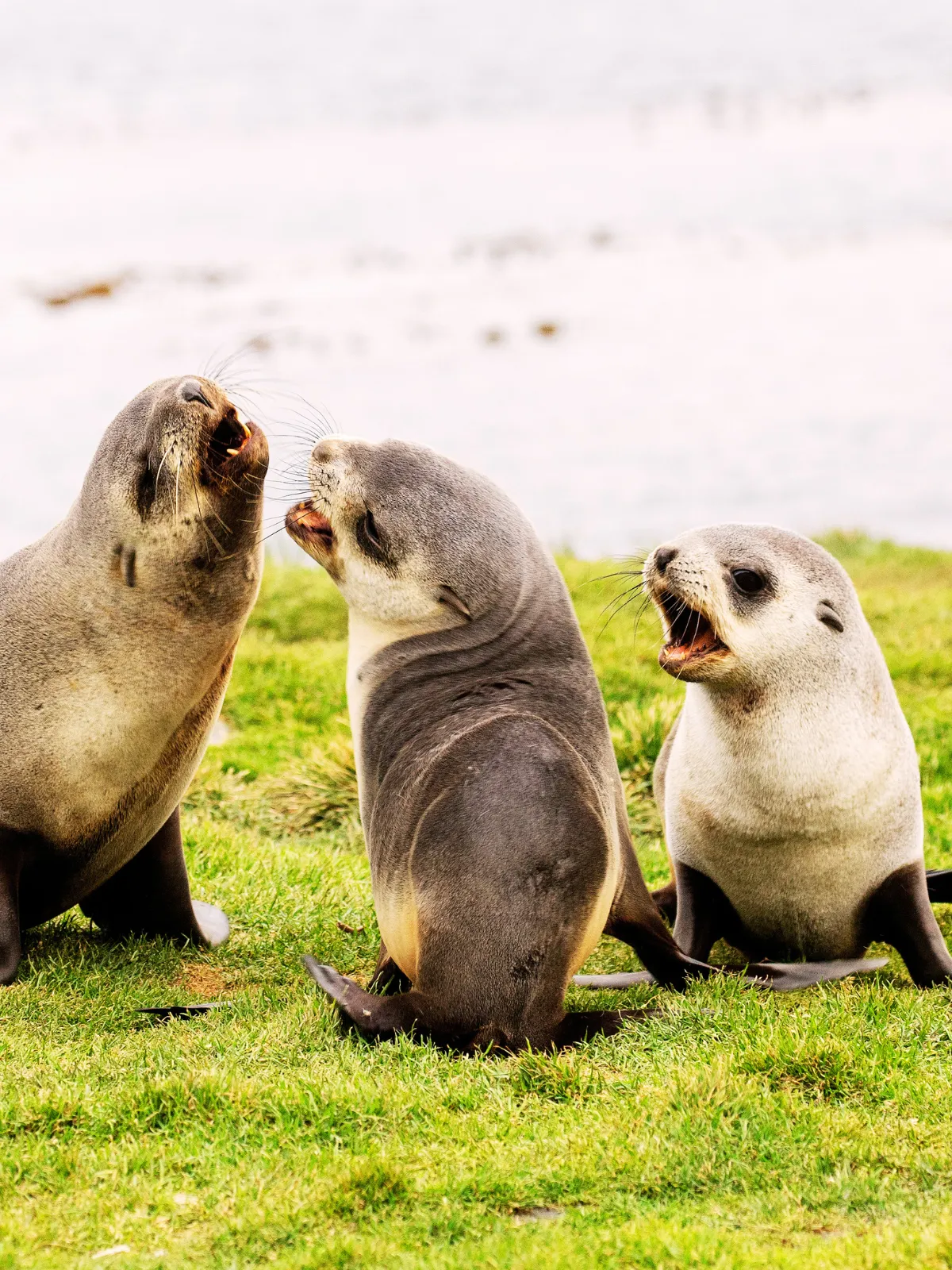
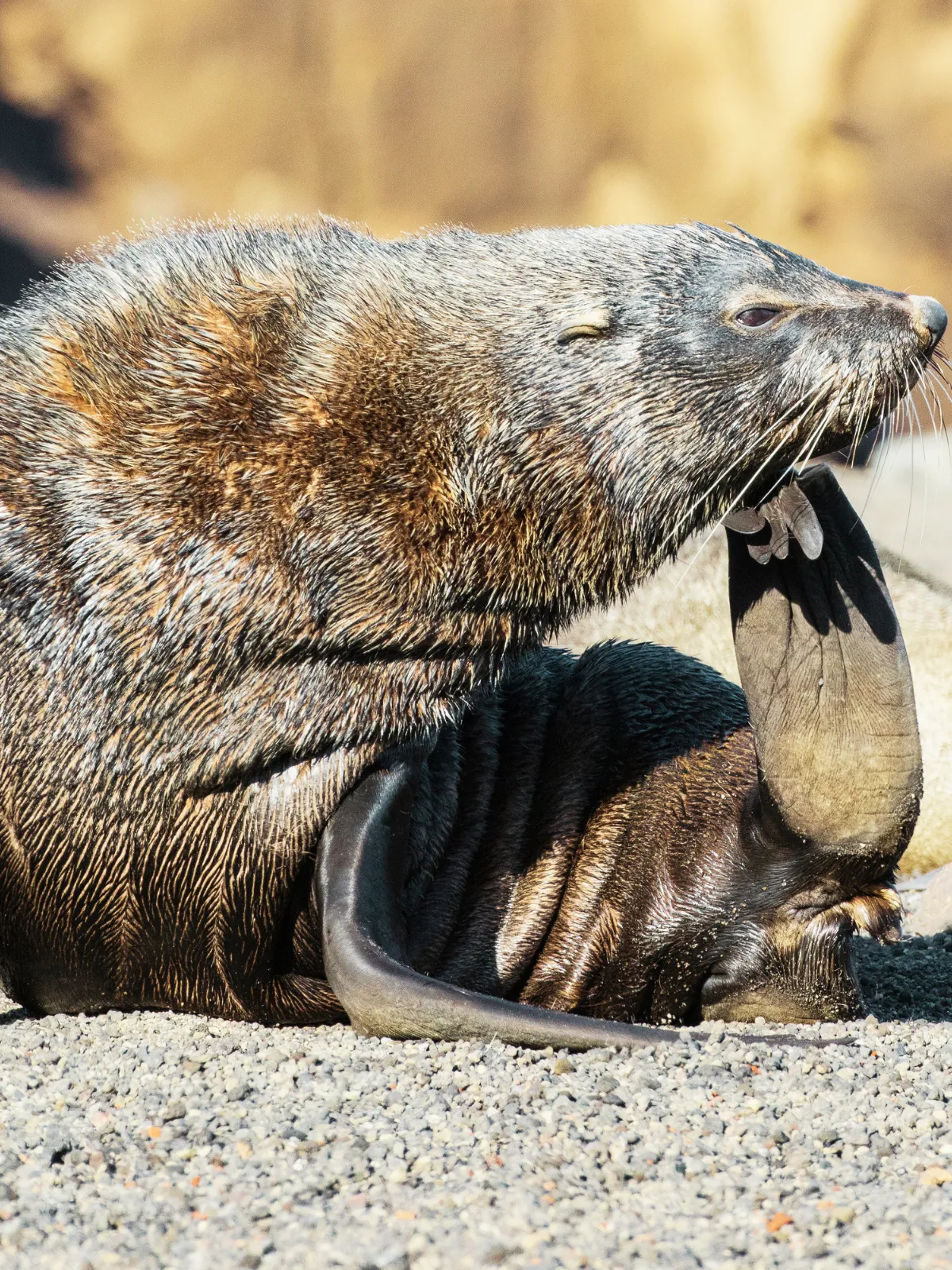
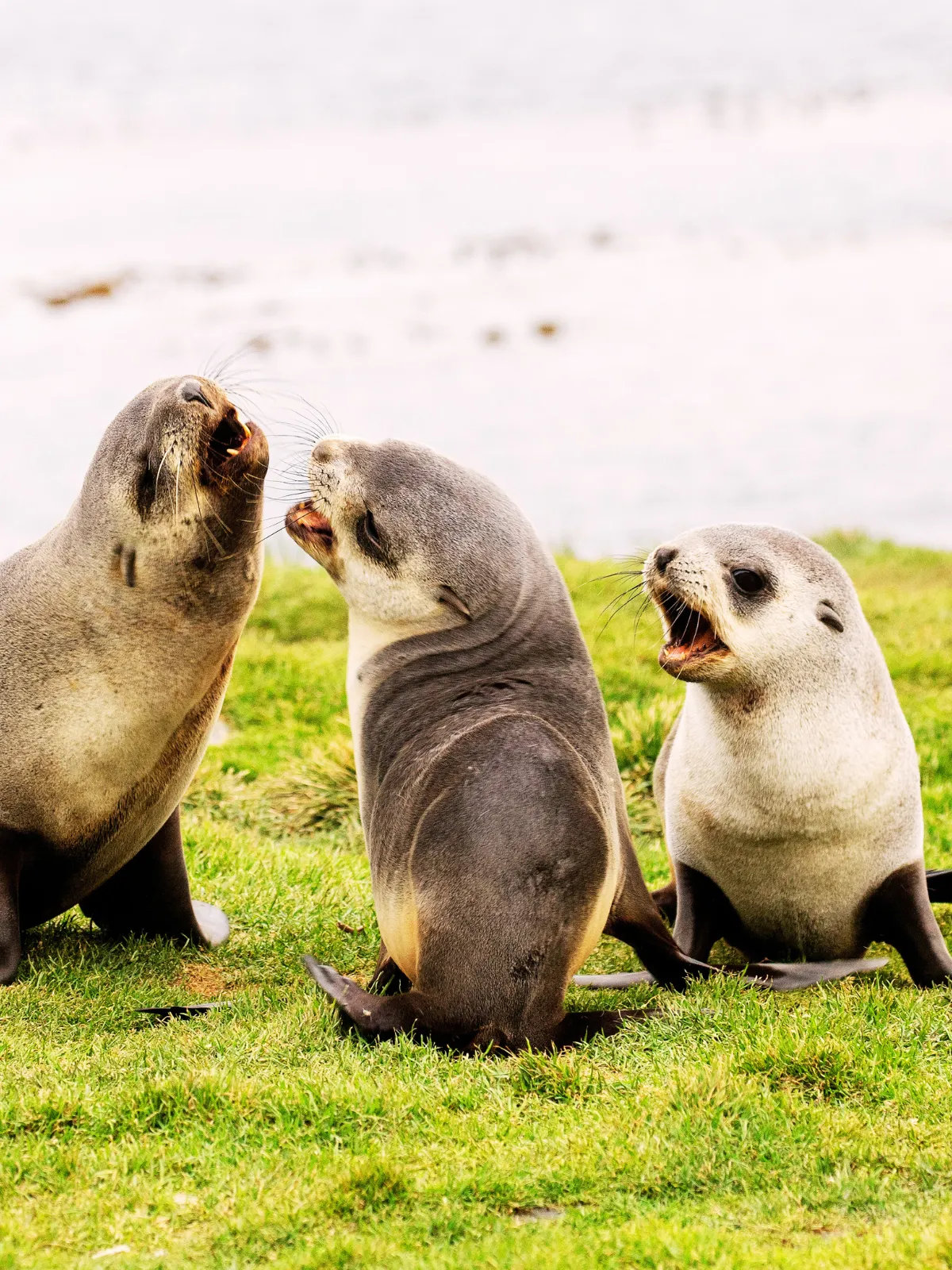
Antarctic Fur Seal With their thick, luxurious coats and spirited personalities, Antarctic fur seals bring remarkable energy to the remote islands they call home. Unlike their true seal cousins, these agile animals sport visible ear flaps and can swing their back flippers forward, allowing them to scramble across rocky shorelines with surprising grace. Watch them on land and you'll quickly see why they're considered one of the most athletic and entertaining seals in the Southern Ocean!

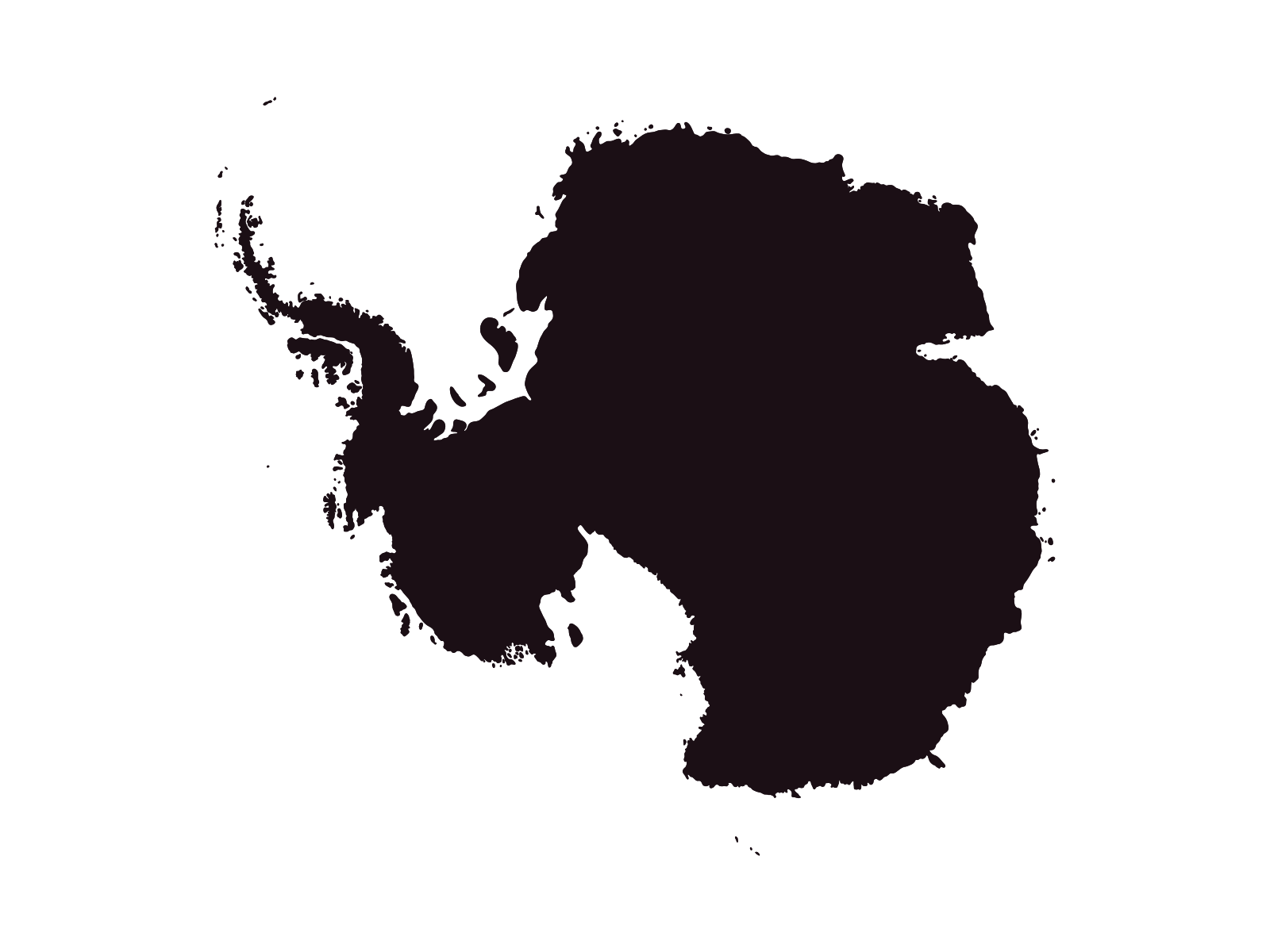
The silhouette of Antarctica map on the white background.

Antarctica

Quick Facts

Length icon
LengthMales 1.8-2 m. Females 1.2-1.4 m
Weight icon
WeightMales 130-210 kg. Females 25-55 kg
Lifespan icon
LifespanFemales 25 years. Males 15 years
Speed icon
SpeedCan dive up to 350 m (males). Dives typically last 3-4 minutes
Diet icon
DietMainly krill, plus fish and squid. Some males occasionally eat penguins.
Antarctic fur seal silhouette
Offspring1 pup per year, nursed for about 4 months.
Population icon
Population944,000 mature individuals down from 2.19 million in 1999
Range icon
RangeSubantarctic islands, 98% breeding on South Georgia

Conservation Status

EXExtinct
EWExtinct in the Wild
CRCritically Endangered
ENEndangered
VUVulnerable
NTNear Threatened
LCLeast Concern
NENot Evaluated

How Antarctic Fur Seals Survive in the Wild

1 / 3

Social Lives of Antarctic Fur Seals

1 / 3

Photo Gallery

Flashcards